Famous Vintage: A Slab Serif Font for Handmade Labels and Shop Branding
I was sitting at my kitchen table with a stack of blank kraft paper tags, a fresh candle that had just finished curing, and that familiar moment of hesitation. The label needed to say something simple—"Farmhouse Cedar"—but every font I tried felt either too fussy or too plain. Then I pulled up Famous Vintage. One click, and I knew. The thick slab serifs landed with a confident thump on the preview screen. The edges were sharp but not harsh. The whole letterform felt like it had been pulled from an old general store sign that had weathered decades of rain and sun. I typed my candle name again, scaled it up, and printed a test sheet. That was the moment Famous Vintage stopped being a font file and started being part of my product line.
The Personality of Famous Vintage on Physical Products
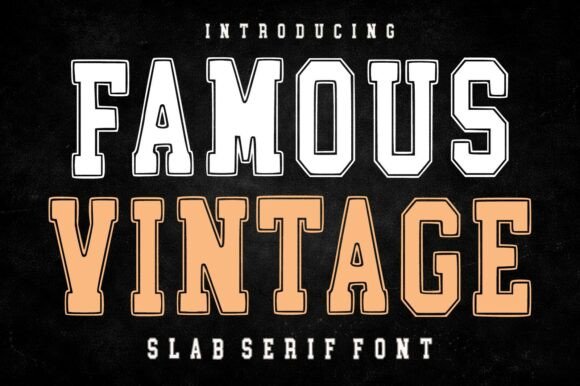
Famous Vintage is a slab serif display font that wears its vintage inspiration openly. The serifs are bold and blocky, the corners are crisp, and the overall posture leans into a western, rustic, or Americana mood without tipping into parody. When I use it on a candle label, it gives the product a sense of age and craftsmanship. A soy candle called "Whiskey & Oak" suddenly looks like it belongs in a restored barn turned boutique shop. The same font on a greeting card for a birthday transforms a simple "Happy Birthday" into a statement that feels handwritten by a blacksmith.
What I love most is how Famous Vintage behaves at different sizes. On a small sticker—say, two inches wide for a lip balm tube—the slab serifs hold their shape. The letters don't collapse into blobs. On a larger sign, like a farmhouse-style welcome board, the same characters gain weight and authority. This versatility matters when you're a maker printing multiple products from one font purchase. I've used it on mug designs (tested in vinyl, heat pressed onto ceramic), on tote bags (screen printed, single color), and on hang tags for handmade soap. Every time, the font carries the same vintage confidence.
Real Products That Come Alive with Famous Vintage
Let me walk through a few projects where Famous Vintage became the backbone of the design.
Candle labels were my first test. I designed a small oval label for a pine-and-leather candle. The phrase "Timber & Hide" sat center, set in Famous Vintage at about 36 points. Below it, a lighter sans serif listed the burn time and scent notes. The contrast was immediate. The slab serif grabbed attention, while the sans serif handled the details. I printed on matte adhesive paper, cut with a rounded corner punch, and applied to amber glass jars. The result looked intentional, not homemade.
Wedding invitation suites came next. A friend asked for a rustic barn wedding set. I used Famous Vintage for the couple's names at the top of the invitation and for the "Reception to Follow" line at the bottom. The body text—date, time, location—went into a clean serif font that didn't compete with the display type. The slab serif set the mood immediately. Guests saw the invitation and said it felt warm, grounded, and personal. That's what Famous Vintage does: it adds emotional weight without trying too hard.
Printable wall art is another category where this font shines. I created a simple 8x10 print that read "Gather" in Famous Vintage, with a thin script underneath saying "around the table." The slab serif anchored the piece, while the script added softness. I listed it as a digital download, and customers used it for kitchen decor, dining room gallery walls, and even above a buffet table at a party. The font's vintage character made the print feel like a heirloom piece, not a quick Canva project.
Boutique packaging tags for small-batch goods—think handmade soap, beard oil, or jam jars—benefit from Famous Vintage's bold readability. A tag that says "Handmade in Small Batches" in this font communicates care and tradition. I've also used it for holiday gift tags. "Merry & Bright" in Famous Vintage, punched with a small hole, tied with twine, and attached to a wrapped gift. Customers told me they kept the tags as bookmarks. That's the kind of tactile response a good display font can generate.
Readability and Production Considerations for Makers
When you're cutting vinyl with a Cricut or Silhouette, font choice becomes a practical decision. Famous Vintage works well because the slab serifs create thick, stable paths. The letters don't have thin hairlines that snap or lift during weeding. I've cut "Coffee" and "Home" and "Farm Fresh" in adhesive vinyl at about two inches tall, and every letter weeded cleanly. The sharp corners transfer without curling, and the letterforms stay true to the design.
For small printed labels—say, one inch wide for a lip balm or spice jar—I recommend keeping Famous Vintage at 18 points or larger. Below that, the slab serifs can start to feel crowded, especially in all caps. For short words or names, it performs beautifully. Longer phrases work too, but you'll want to adjust tracking (letter spacing) to keep the blocks of text from feeling too heavy. I usually add 10 to 20 units of tracking when I set a sentence like "Handcrafted in Vermont" in Famous Vintage.
If you're printing on absorbent materials like kraft paper or uncoated cardstock, test a sample first. The bold serifs can spread slightly on soft paper, which actually enhances the vintage look. On smooth, coated paper, the edges stay razor sharp. Both effects are desirable, depending on the product. For stickers destined for water bottles or laptop covers, I recommend a laminate or UV coating to protect the ink and keep those sharp serifs crisp over time.
Font Pairing Ideas for a Complete Look
Famous Vintage works best as a display font, so pairing it with a simpler companion is often the right move. I've had success with these combinations:
- Clean sans serif – A neutral sans like Montserrat or Open Sans handles body text, ingredient lists, and fine print. The contrast between a blocky slab serif and a smooth sans creates visual hierarchy instantly.
- Simple serif – For a more traditional feel, pair Famous Vintage with a lightweight serif like Lora or Merriweather. This works beautifully on wedding invitations and formal packaging where you want a cohesive but not monotone look.
- Script or handwritten font – A flowing script adds a personal, handmade touch alongside Famous Vintage. I've used this combination for greeting cards and gift tags. The script says "from my hands to yours," while the slab serif says "this is quality work."
- Bold display font – If you're designing a poster or sign and want high impact, layering Famous Vintage with a condensed bold sans can create a dramatic, retro-inspired headline stack.
The key is to let Famous Vintage lead. It has a strong voice, so your pairing font should support, not compete. I always set the slab serif first, then find a companion that echoes its proportions or mood without copying them.
What to Check Before Using Famous Vintage for Your Shop
Before you start selling products with Famous Vintage, there are a few practical details worth confirming. First, review the included styles and weights. Some versions of this font come with uppercase and lowercase letters, numerals, punctuation, and basic ligatures. If you need extended language support or special alternates, check the character set. I once assumed a font had a swash alternate for a capital letter, only to find it missing mid-project. Know your file before you commit.
File formats matter too. Most font files come in OTF (OpenType) and TTF (TrueType). For cutting machines and print-on-demand software, OTF is usually the better choice because it supports more typographic features like ligatures and stylistic sets. If you're designing in a program like Adobe Illustrator or Affinity Designer, OTF gives you the most flexibility. For Canva or simpler design tools, TTF is fine as long as the font file is compatible.
Commercial licensing is non-negotiable. If you are selling physical products—candles, mugs, shirts, tote bags, stickers, signs—you need a commercial license for the font. The same applies to digital downloads like printable wall art, invitation templates, or planner pages. If you sell a product that includes the font as part of the design (even if the font is rasterized or outlined), the license must cover that use. Read the terms from the foundry carefully. Some licenses restrict the number of sales, require attribution, or limit certain product categories. Do not assume. Confirm.
Making Famous Vintage Work Across Your Brand Identity
Once you start using Famous Vintage on one product, you may find yourself wanting it everywhere. That's fine, but use it with intention. A consistent brand voice matters more than font frequency. I use Famous Vintage for hero text—the main phrase, the product name, the headline—and switch to simpler fonts for supporting information. That way, the slab serif remains a signature element, not wallpaper.
On my shop's homepage banner, I set "Handmade with Purpose" in Famous Vintage. On product listings, the item title often appears in the same font on the first mockup image. Customers who browse multiple listings start to associate that bold, vintage lettering with my brand. They recognize the style before they read the words. That's brand recognition built from a single font choice.
For social media graphics, I use Famous Vintage sparingly. Instagram stories get the font on the main text layer, then a softer font for captions or location tags. The slab serif grabs the scroll-stopping moment. The companion font delivers the information. This rhythm works for product launches, seasonal announcements, and behind-the-scenes posts.
The Emotional Appeal of a Vintage Slab Serif
There is something about a slab serif font like Famous Vintage that speaks to durability and permanence. When I see it on a product I made, I feel like I'm offering customers not just a candle or a card, but a piece of something older than the present moment. It suggests that the item was made with care, that it will last, that it belongs in a home full of stories. That emotional layer is hard to achieve with a generic sans serif or a decorative script alone.
Famous Vintage brings that feeling to every product it touches. Whether it's a wooden sign for a farmhouse kitchen, a greeting card for a friend's milestone, or a set of stickers for a small business launch, the font does the heavy lifting of tone. As a maker, I get to focus on the materials, the production, the details. The font already knows the mood.
I keep Famous Vintage in my active font folder, not archived. It gets used every season. Fall labels, winter gift tags, spring wedding invitations, summer market signs. The font adapts because its vintage warmth is timeless. For any maker who wants their products to feel grounded, confident, and beloved from the first glance, Famous Vintage is a font worth printing, cutting, and sharing.